To those millions of women who experience cramps every single month during their period, taking Ibuprofen or any other analgesic may seem like the only way to go. However, pharmaceutical analgesics do not work all the time – and when taken regularly, have their drawbacks. The need for something better than that is obvious – many women suffer from cramping pains, and it is a huge issue that needs to be addressed. Here comes ginger.
Understanding Menstrual Pain (Dysmenorrhea)
Menstrual pain, which results from severe pain in the lower abdomen known as dysmenorrhea, is known to affect up to 91% prevalence of women. The pain can be classified into two types:
In primary dysmenorrhea, there is pain resulting from excessive uterine contractions without any structural problems or pathologies in the pelvis. The cause of this pain is high levels of prostaglandins — compounds that result in the contraction of the uterus.
Secondary dysmenorrhea is menstrual pain that results from another disease; the common cause of this pain is endometriosis, although there may be others, such as chronic pelvic inflammatory disease, uterine fibroids, cervical stenosis, or other anatomical abnormalities.
Pharmacologic pain killers such as nonsteroidal anti-inflammatory drugs (NSAIDs), including ibuprofen and mefenamic acid, are widely recommended and are the mainstay for managing dysmenorrhea. However, the success rate of these drugs is known to be less than 85,% and adverse effects when used continuously. In many cases, an alternative approach is needed.
What Is Ginger?
Ginger (Zingiber officinale) is an extremely potent medicinal herb and is a member of the botanical family alongside herbs such as turmeric, cardamom, and galangal. Ginger originates from Southeast Asia and has been highly valued worldwide through the years due to its culinary and medicinal qualities.
The history of ginger as an important ingredient of Chinese herbal medicine and Ayurveda is ancient. It is an energetically warming and stimulating herb. Traditionally, it was used to enhance blood circulation, to relieve spasms, produce diaphoresis, and to stimulate digestion. All these actions can be easily related to their effect on the menstrual cycle.

How Does Ginger Relieve Menstrual Cramps?
Ginger’s ability to relieve menstrual pain is understood through both traditional and modern frameworks.
The Traditional Chinese Medicine View
In TCM theory, dysmenorrhea can be seen as a syndrome of cold, qi, and blood stagnation in the uterus. The function of ginger as therapy in the TCM model is to disperse cold, to warm the channels, to dispel abdominal stagnation, and to stop the bleeding. It is an important component of ancient TCM herbal formulas like Wen Jiang Tang (Warm the Uterus Decoction) that have proven efficacy in relieving pain in secondary dysmenorrhea, particularly endometriosis pain.
The Modern Scientific View
Excessive uterine muscle contractions in primary dysmenorrhea are caused by the increased levels of prostaglandins, which can be reduced by the action of NSAIDs because of the effect of cyclooxygenase-2 (COX-2) inhibitors on their formation. Ginger has a similar mechanism of action, although even wider.
Active components that exert pain-killing properties of ginger include gingerols and shogaols. These substances suppress prostaglandin function by blocking COX-2, NF-κB, and 5-lipoxygenase (5-LOX), which are different inflammation-related pathways that pharmaceutical NSAIDs usually inhibit by means of only one of them.
There is another pain-relieving mechanism associated with shogaols; these substances are agonists of TRPV1, a transient receptor potential cation channel related to pain sensation. With the continuous stimulation of TRPV1, it gets desensitized, resulting in the reduction of pain sensitivity.
Such an approach makes ginger so promising for natural pain relief due to its ability to affect several inflammation pathways at once.
What Does the Research Say?
The amount of research supporting ginger as an agent for treating dysmenorrhea is impressive and continues to grow.
In 2015, a systematic review was conducted of all existing scientific data about the effectiveness of ginger against primary dysmenorrhea. Out of 29 papers considered, seven randomized controlled trials qualified for further evaluation. The study found that the intake of 750–2000 mg of ginger successfully alleviates the menstrual pain on the first three-four days of the menstrual cycle. Furthermore, the research established that ginger was equally effective in comparison with mefenamic acid and ibuprofen, drugs usually recommended for the treatment of dysmenorrhea.
The same review mentioned that various studies have proved that ginger does not cause any adverse effects at a dose of 2g/kg of body mass.
In other words, ginger is not a folk medicine. It is a scientifically supported method of relieving menstrual pain.
How to Use Ginger for Menstrual Cramps
Here are some practical means of using ginger therapeutically:
- Standardized herbal preparations in doses of 750 to 2000 mg as needed on the first days of menstruation – such is the preparation used in all major clinical trials
- Powdered dried ginger is used as an ingredient in food, baked items, or simply sprinkled into meals
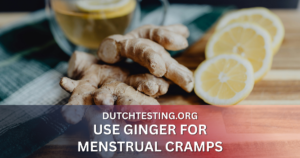
- Ginger tea brewed from fresh slices of the herb in hot water for 10 to 15 minutes – the easiest way to consume this herb
- Fresh ginger used in smoothies or juices with vegetables – a good means to use this herb every day before and during menstruation
- Chinese herbal formulas that include ginger and are prepared according to a prescription of a competent herbalist for complicated cases of secondary dysmenorrhea
If the pain during menstruation is acute, the standardized herb is the best choice. To prevent it in advance, the use of fresh or powdered ginger in the week prior to the onset of menstruation is recommended.
Is Ginger Safe?
Yes, ginger is one of the safest spices. Studies indicate that it can be taken safely in quantities of up to 2g per kilogram of body weight. At the doses applied in the treatment of dysmenorrhea (750–2000mg), it has very few side effects and rarely causes any complications. Ginger is a safe compound and has no gastrointestinal side effects like NSAIDs.
This applies to any supplement – women who are pregnant or taking blood thinners, as well as those suffering from complex diseases, need to seek medical advice first.

Connecting Menstrual Pain to Hormonal Health
When the dysmenorrhea, particularly when it comes to secondary dysmenorrhea caused by conditions such as endometriosis, fibroids, or polycystic ovary syndrome (PCOS), is hormone-related, it requires a broader analysis of the patient’s hormones than is done by regular blood testing. Knowing about the balance of hormones such as estrogen and progesterone, their metabolites, and markers of inflammation can be useful in discovering the real reason for severe or recurrent dysmenorrhea.
The DUTCH test analyzes the level of estrogen and progesterone as well as their metabolites based on the dried urine test that a woman performs at home, giving much more complete information about her hormonal state than a usual blood test. If a woman has painful menstruation and the pain lasts for a long time, is severe, or goes along with other symptoms of hormonal disorders, it is crucial to understand what makes them hormonal.
A free consultation at dutchtesting.org will help you decide whether the DUTCH test is the right option for you.
Frequently Asked Questions (FAQs)
1. Can ginger actually help with menstrual cramps?
Yes. Various randomized controlled trials and systematic reviews have found that taking 750-2000 mg of ginger per day is an effective remedy for treating menstrual pain for the first three to four days of menstruation. The research shows that ginger is equally effective as ibuprofen and mefenamic acid.
2. How much ginger should I take for menstrual cramps?
The recommended dosage is 750-2000 mg of standardized ginger extract per day taken for the first three to four days of menstruation. Fresh and dried ginger can be used as part of food and tea; however, it may not provide a therapeutic amount of the substance alone.
3. How does ginger reduce menstrual pain?
It acts through its components, namely gingerols and shogaols, which decrease the production of prostaglandins through the inhibition of the COX-2, NF-κB, and 5-LOX pathways. Shogaols also increase TRPV1 pain receptors’ activity, which gets desensitized with time.
4. Is ginger as effective as ibuprofen for period pain?
Research suggests yes – at doses of 750–2000mg, ginger is as effective as mefenamic acid and ibuprofen for primary dysmenorrhea. It also offers a broader anti-inflammatory mechanism without the gastrointestinal side effects associated with regular NSAID use.
5. What is the difference between primary and secondary dysmenorrhea?
Primary dysmenorrhea is menstrual pain caused by excessive uterine contractions and elevated prostaglandins, with no underlying pelvic pathology. Secondary dysmenorrhea is pain caused by an identifiable condition such as endometriosis, uterine fibroids, chronic pelvic inflammation, or cervical stenosis.
6. Is ginger safe to take for menstrual pain every month?
Yes. Ginger has a strong safety profile and is safe at doses up to 2g per kilogram of body weight. Unlike NSAIDs, regular use of ginger does not carry the same risk of gastrointestinal damage. Women who are pregnant or on anticoagulant medications should check with their provider first.
7. Can hormonal imbalances make menstrual cramps worse?
Yes. Conditions like estrogen dominance, low progesterone, endometriosis, and PCOS are all associated with more severe dysmenorrhea. Understanding the hormonal picture through comprehensive testing like the DUTCH test can help identify whether a hormonal imbalance is contributing to the severity of menstrual pain.