The effects of hormones are seen in almost every aspect of our lives, from our energy levels, our emotions, our sleep patterns, metabolism, our fertility, and even our stress reaction. However, when it came to measuring the quality of our hormonal system, the methods available for a long time were not holistic or convenient enough.
If you have heard about this type of test before but do not understand its meaning, we’ve got you covered!
What Does DUTCH Stand For?
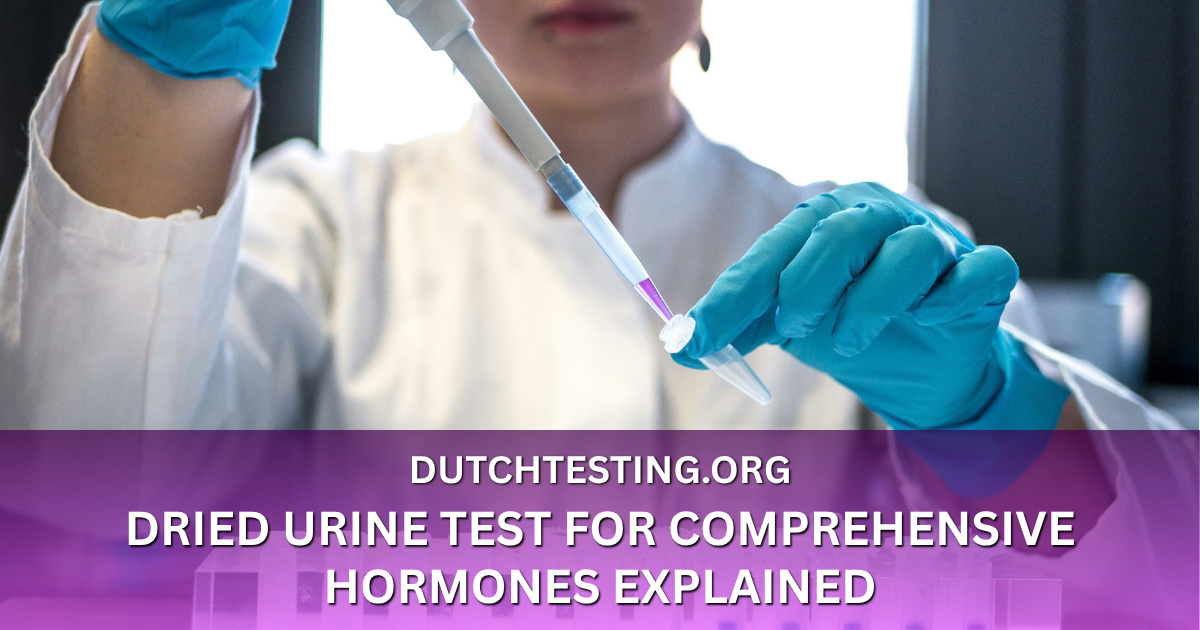
“DUTCH” is an abbreviation that means Dried Urine Test for Comprehensive Hormones. This test was invented by Precision Analytical Inc., which was founded by Mark Newman, MS, and became available from about 2012 onwards. If you consider its name, much is said about it – you will understand that it employs dried urine samples and is a test designed to provide you with information about your hormones.
How Is It Different From a Standard Hormone Blood Test?
Hormone testing is usually done by blood tests that are taken from the laboratory or clinic. Blood tests are helpful and effective; however, there are some drawbacks to blood tests concerning hormone health.
With a traditional blood test, you get information about the state of your hormone levels at a particular time. However, the hormone level is not constant; it changes throughout the day: for instance, the highest level of cortisol is in the morning, while by the end of the day, the level of this hormone drops significantly. Thus, a single blood draw can tell nothing about hormone fluctuations.
How does the DUTCH test solve this problem? On the one hand, a test takes several samples from you during a day, 24 hours, which reflects hormone fluctuations throughout the day. On the other hand, theDUTCH test is unique because it not only measures hormone levels, but also hormone metabolites, which are the by-products of hormones broken down after they function.
How Does the DUTCH Test Work?
The process is straightforward and takes place almost entirely at home.
You collect four to five urine samples on absorbent filter paper strips at scheduled times across a 24-hour window. The typical collection schedule looks like this:
- Late afternoon (around 5–10 PM): First sample
- Before bed: Second sample
- Upon waking: Third sample
- Two hours after waking: Fourth sample
- (Some versions include a middle-of-the-night sample)
Each of these is immersed in a fresh urine specimen and left to dry completely overnight before being sealed for shipping back to the lab. The test specimens are analyzed by the lab via a method called mass spectrometry, which is extremely accurate in measuring tiny amounts of hormone concentrations.
It usually takes anywhere from 7 to 15 business days for the results to come out, complete with a detailed report of many indicators.
What Hormones Does the DUTCH Test Measure?
This is where the DUTCH test earns its “comprehensive” label. Depending on which version of the test you take, it can measure more than 35 hormones and biomarkers, including:
Sex Hormones:
- Estradiol (E2), Estrone (E1), Estriol (E3) – the three primary estrogens
- Estrogen metabolites, including 2-OH, 4-OH, and 16-OH pathways
- Progesterone and its metabolites
- Testosterone and DHEA-S
- Androgen metabolites
Adrenal Hormones:
- Cortisol (free and metabolized)
- Cortisone
- DHEA and DHEA-S
Other Markers:
- Melatonin (measured as 6-OHMS, a urinary metabolite)
- Nutritional organic acids, including markers related to oxidative stress, B vitamin status, and neurotransmitter metabolism
- Neurological markers related to dopamine, norepinephrine, and serotonin activity
The combination of free and metabolized cortisol is especially useful. The former measures the amount of active cortisol present at any one time, while the latter measures the total amount of cortisol produced over a period of time, thus providing a much clearer indication of adrenal health than either measure alone.
Understanding Hormone Metabolites: Why They Matter
One cannot underestimate the importance of hormone metabolites in comprehending the benefits of the DUTCH test and what it can bring to a person’s health.
For instance, once estrogen has done its work in the body, it is metabolized by the liver into several pathways. Some of the pathways are known to have protective functions, while others increase oxidative stress. For example, there is some research linking 4-OH estrogen to oxidative stress and its effects on estrogen-dependent tissue. Pathways 16-OH and 2-OH produce high and low estrogenic activity, respectively, where 2-OH is considered the optimal pathway.
It goes without saying that knowing one’s estrogen level tells nothing about the metabolic pathway. The DUTCH test provides this knowledge and can be valuable for those who worry about hormonal cancers, estrogen dominance, endometriosis, or PCOS.
The same holds when we speak of hormones such as cortisol, testosterone, etc.
The Different Types of DUTCH Tests
There isn’t just one version. Precision Analytical offers several options depending on your health goals:
DUTCH Complete
Popular and most inclusive test. Measures sex hormones, adrenal hormones, metabolites of hormones, organic acids, and melatonin. Useful for the overall assessment of your hormones.
DUTCH Plus
In addition to all the items covered in the DUTCH Complete Test, the Cortisol Awakening Response (CAR) is included in this test; CAR is the collection of several samples in the first hour after awakening to measure the brain and adrenal gland communication. This is especially helpful in assessing chronic stress and adrenal burnout.
DUTCH Cycle Mapping
Ideal for women with normal menstrual cycles. Instead of measuring just one day, this test measures the pattern of estrogens and progesterones through the whole cycle via several dried urine samples. Useful for issues related to fertility, polycystic ovaries, and overall hormonal patterns for the month.
DUTCH Sex Hormone Metabolites
The second type narrows down its focus and concentrates on estrogen, progesterone, and androgen hormones and their metabolites. Used as a baseline or as a follow-up to hormone replacement therapy.
Who Is the DUTCH Test For?
The DUTCH test can be done by anyone regardless of gender. This test would come in handy for individuals who are:
- Suffering from unexplained fatigue, mood fluctuations, brain fog, or insomnia
- Going through the stages of perimenopause, menopause, and andropause (hormonal changes in males)
- Struggling with PCOS, endometriosis, PMS, or menstrual problems
- Looking into fertility problems
- Interested in assessing how well they have responded to HRT
- Anxious about their stress levels and adrenal functioning
- In need of a functional root cause analysis of their problem
This is an excellent diagnostic test recommended by many integrative and functional medicine experts to pinpoint any underlying hormonal reasons behind chronic health problems.
The Science Behind Dried Urine Testing
The use of dried urine as a sample medium has scientific evidence. A peer-reviewed study has proven that mass spectrometric measurements of dried urine samples from filter paper give results that correlate with traditional liquid urine sample collection in 24 hours. It was shown that four dried spot urine samples, collected at different time points during the day, can be reliably used instead of a 24-hour collection for hormone levels’ estimation.
Normalization of the results for urine concentration makes the use of dried samples even more reliable due to the fact that concentrations vary from one moment to another.
However, it should be mentioned that the majority of validation studies have been carried out either by the developers of the test or under their sponsorship. Independent long-term studies have not been performed yet. Thus, the DUTCH test is popular within functional medicine, but cannot be regarded as a gold standard for hormone analysis according to conventional endocrinology.
DUTCH Test vs. Saliva Testing vs. Blood Testing
| Feature | DUTCH (Dried Urine) | Saliva Test | Blood Test |
|---|---|---|---|
| Sample Type | Dried Urine | Saliva | Blood Draw |
| Hormones + Metabolites | Yes | Hormones only | Hormones only |
| Daily Cortisol Rhythm | Yes | Yes | Partial |
| At-Home Collection | Yes | Yes | No |
| Melatonin Measurement | Yes | Some tests | Rarely |
| Organic Acids | Yes | No | No |
| Insurance Coverage | Usually No | Usually No | Often Yes |
Limitations to Keep in Mind
However, no test is flawless. Even though the DUTCH test provides an extremely deep level of information about your hormonal balance, there are several issues you should consider before taking it. First of all, it is only conducted for one day. Therefore, such external factors as illness or stress on that very day may affect the results significantly. Secondly, this test cannot be used for diagnosing conditions such as Addison’s disease and Cushing’s syndrome. In this case, other specialized stimulation tests need to be taken. Finally, the results of any DUTCH test should be thoroughly analyzed by a specialist.
Final Thoughts
Undoubtedly, the Dried Urine Test for Comprehensive Hormones has made an incredible contribution to medicine. The test provides not only information on the level of your hormones, but it also shows how your body metabolizes them. The most important thing about the DUTCH test is the possibility to conduct it for 24 hours instead of at a single point. However, it does not replace all other diagnostic procedures.
Frequently Asked Questions (FAQs)
What does the DUTCH test actually test?
DUTCH testing evaluates over 35 hormones and metabolites using dried urine testing, including estrogen, progesterone, testosterone, cortisol, DHEA-S, melatonin, and organic acids, as well as metabolic pathways for hormones.
Is the DUTCH test accurate?
Multiple studies demonstrate the effectiveness of using dried urine testing via mass spectrometry to measure hormone levels and metabolites, equivalent to 24-hour urinary testing. The majority of studies have been industry-sponsored, but interpretation should be done along with clinical assessment.
How is dried urine testing different from a saliva hormone test?
Although both tests involve at-home testing methods, the DUTCH testing goes one step further and involves the measurement of hormone metabolites, organic acids, and melatonin levels, which are not possible via salivary hormone testing.
Can men take the DUTCH test?
Yes. The DUTCH test is pertinent for men since it can help evaluate testosterone metabolism, cortisol activity, estrogen levels, and DHEA-S, which are some of the key indicators of hormonal balance and optimal adrenal function in males.
Does the DUTCH test replace a blood test?
No. Some blood tests are required as per diagnostic practice guidelines, and they are usually reimbursed by insurers. However, the DUTCH test enhances blood test results by adding metabolite values and circadian hormone levels.
How long does it take to get DUTCH test results?
The lab results are normally available in 7-15 days from the date the laboratory receives your samples. Then, your health care provider discusses the results with you during another appointment.